Source fttx fiber optic tester with fc 6s cleaver for FTTH, Telecom, and Network Projects
Explore 30 listings for the fttx fiber optic tester with fc 6s cleaver designed for FTTH, telecom, and network projects. Buyers can compare specifications, certifications, and prices to find suitable tools for cutting fiber and testing connections.
Key considerations
Products List








Comprehensive Sourcing Guide
Strategic Sourcing Guide for FTTH Fiber Optic Testers and FC-6S Cleavers
Understanding the Product Ecosystem and Core Specifications
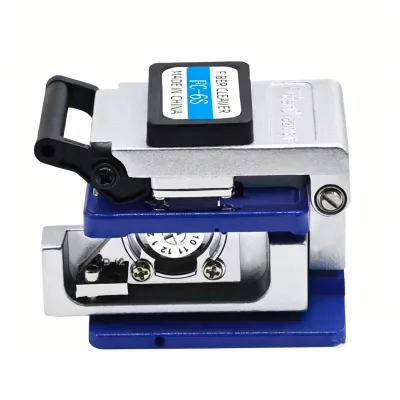
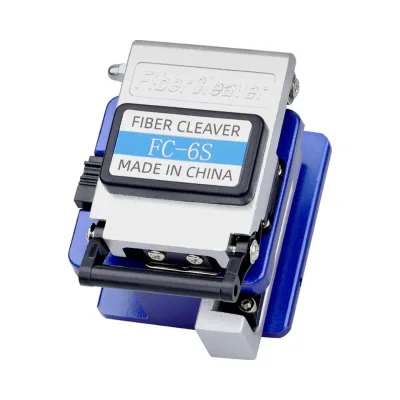
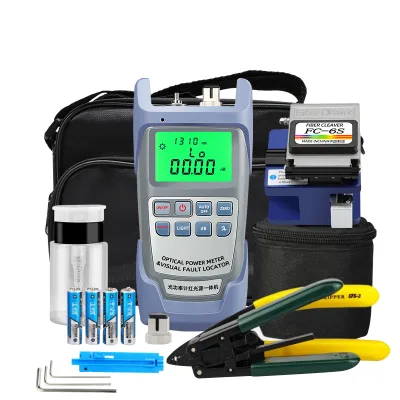
When sourcing equipment for Fiber to the Home (FTTH) and FTTX solutions, buyers must distinguish between the specialized tools required for fiber termination and the broader testing instruments used for network validation. The core keyword combination of "FTTH fiber optic tester" and "FC-6S cleaver" points to a specific operational workflow: the precise cutting of fiber strands followed by rigorous optical performance verification. The FC-6S designation typically refers to a fiber cleaver model, a critical component in the splicing and termination process. Based on available product data, the FC-6S cleaver is characterized by a specific functional profile, including a blade life of 36,000 cores and a cleave length range of 9mm to 16mm. These tools are often constructed from materials such as Cool Steel and ABS, designed to withstand the rigors of field deployment.
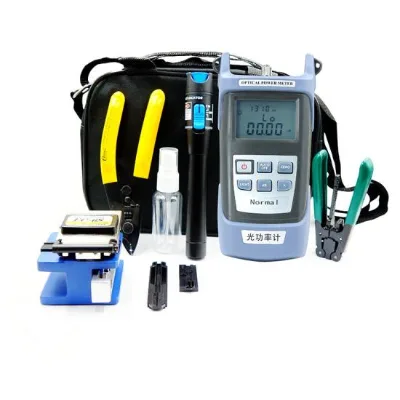
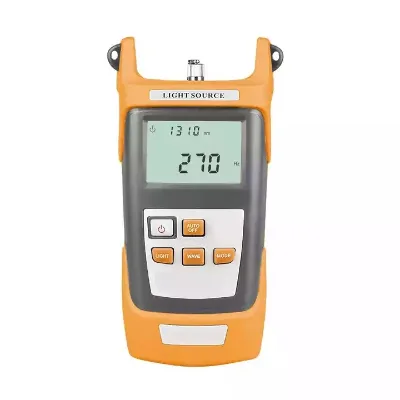
The physical dimensions of such cleaving tools are compact, with specific models measuring approximately 94mm by 55mm by 49mm and weighing around 430g. This portability is essential for technicians working in confined spaces or remote locations. In contrast, the fiber optic testers, often sold as part of comprehensive FTTH tool kits, serve a different function. These kits are designed for installation and testing, featuring functions such as VFL (Visual Fault Locator) and OPM (Optical Power Meter). The optical power measurement range for these devices typically spans from -70 dBm to +6 dBm, allowing for the detection of signal loss across various network distances. The VFL component often operates at 1mW, with optional configurations for 10mW, 20mW, or 30mW to assist in identifying macro-bends and breaks in the fiber.
The operational environment for these devices is strictly defined by their ambient temperature ratings. Cleavers and testers must function reliably within a range of -45°C to +80°C for the cleaver, while the tester kits generally operate between -10°C and +60°C. Storage temperatures for the testing equipment are typically rated from -25°C to +70°C. These specifications ensure that the equipment remains functional in diverse climates, from the freezing conditions of northern regions to the heat of tropical deployment zones. The connectivity interfaces for these testers support a variety of connector types, including SC, FC, ST, and RJ45, ensuring compatibility with the wide array of network infrastructure found in modern telecommunication networks.
Compliance, Certification, and Regulatory Standards
In the B2B procurement of fiber optic equipment, verifying compliance with international standards is not merely a formality but a critical risk mitigation strategy. The product data indicates that suppliers often provide certifications such as RoHS (Restriction of Hazardous Substances) and CE (Conformité Européenne). These certifications are essential for ensuring that the equipment does not contain hazardous materials and meets the safety requirements for the European market. Additionally, some product listings reference ISO and GS certifications, which further validate the quality management systems and safety standards of the manufacturing process.
Buyers must verify that the specific units they procure carry these certifications, as the presence of a certification on a general product page does not guarantee that every individual SKU or batch is compliant. The "Condition" of the products is listed as "New," which is a standard expectation for B2B procurement, but buyers should confirm that the "New" status includes original packaging and unopened seals to prevent the receipt of refurbished or used goods. The "Warranty" period is a significant factor in procurement decisions, with observed data suggesting a standard warranty of 2 years for these types of tools. This warranty period should be clearly defined in the purchase agreement, covering defects in materials and workmanship.
The "Standard Function" of the fiber optic testers is another area requiring strict verification. The data points to VFL and OPM as standard functions, but buyers must ensure that the specific model number, such as FFS61 or similar, supports these functions as advertised. The "Standard" category for the cleaver is identified as a "Fiber Cleaver Cutting Tool," while the tester kits fall under "Fiber Tool Kits." It is crucial to align the purchased items with the intended application standards, such as those for FTTX Solutions or general FTTH Projects. The "Product Standard" for packaging is often listed as "Box," but for bulk shipments, "Shipping Box or Wooden Pallet" is the norm. Buyers should explicitly request confirmation of the packaging standard to ensure that the goods are protected during transit, especially given the delicate nature of optical components.
Cost Drivers and Pricing Dynamics in the Market
The pricing for FTTH fiber optic testers and FC-6S cleavers is influenced by a complex matrix of factors, including material composition, certification levels, and the inclusion of accessories. The observed price range in the market spans from $0.25 to $628.82, a wide variance that reflects the difference between individual components and complete, high-end tool kits. A single cleaver or a basic connector might fall at the lower end of this spectrum, while a comprehensive FTTH tool kit containing a VFL, OPM, and multiple connectors will command a price closer to the upper limit.
Material costs play a significant role in pricing. The use of "Cool Steel" for the cleaver blades and ABS for the housing contributes to the durability and, consequently, the cost of the device. Higher-grade materials often correlate with longer blade life and better resistance to environmental stress, justifying a higher price point. The "Customization" availability is another cost driver. Buyers who require specific branding, custom packaging, or tailored specifications may incur additional costs, as the "Customization" attribute is listed as available but not standard for all units.
The "MOQ" (Minimum Order Quantity) is a critical financial consideration. The observed MOQ range is between 1 and 1000 units. For small-scale projects or initial procurement trials, buyers can source single units, but the unit price may be higher due to the lack of volume discounts. Conversely, bulk orders of 1000 units can significantly reduce the per-unit cost, making them more attractive for large-scale network deployments. The "Sample Status" is also a factor; buyers can often request samples to verify quality before committing to a large order, though this may involve a separate fee or higher unit cost.
Shipping and packaging costs are also embedded in the final price. The "prod_packing" attributes, such as "1PCS/Box" or "1 Set/Bag," indicate the level of individual protection. For international shipping, the choice between a "Shipping Box" and a "Wooden Pallet" will impact logistics costs. Wooden pallets are more expensive but offer superior protection for heavy or high-value shipments. Buyers must calculate the total landed cost, including duties and freight, rather than focusing solely on the base product price.
Typical Applications and Network Deployment Scenarios
The primary application for these tools is within the realm of FTTH (Fiber to the Home) and FTTX (Fiber to the x) solutions. These technologies are the backbone of modern telecommunication networks, delivering high-speed internet, voice, and video services directly to end-users. The FC-6S cleaver is indispensable in the splicing process, where precision is paramount. A cleave length of 9mm to 16mm ensures that the fiber ends are prepared correctly for fusion splicing, minimizing signal loss and ensuring a strong mechanical bond. The "Function" of cutting fiber is a fundamental requirement for any technician working on fiber termination.
The fiber optic testers, with their VFL and OPM capabilities, are used for network validation and troubleshooting. The "Use" cases include telecommunication networks, wireless LAN, 4G, and various wired LAN configurations. The ability to measure optical power from -70 dBm to +6 dBm allows technicians to verify signal integrity across long distances and identify potential issues such as excessive attenuation or broken fibers. The "Connector Type" compatibility with SC, FC, ST, and RJ45 ensures that these testers can be used across a wide range of network architectures, from legacy systems to modern high-speed deployments.
The "Application" field explicitly mentions "FTTH Project," highlighting the specific focus of these tools. In a typical FTTH deployment, a technician might use the cleaver to prepare the fiber for splicing to a distribution box and then use the tester to verify the connection before handing over the service to the customer. The "Network" attributes, including Wireless LAN and 4G, suggest that these tools are also relevant in scenarios where fiber is used to backhaul wireless networks. The "Working temperature" range of -10°C to +60°C ensures that the equipment can be used in various outdoor and indoor environments, from rooftop installations to basement server rooms.
Supplier Evaluation and Origin Verification
When evaluating potential suppliers, the "prod_origin" is a key piece of information. The data indicates that products originate from various locations in China, including Ningbo, Guangdong, and Jiangsu. These regions are known for their manufacturing capabilities in electronics and telecommunications equipment. However, the specific origin should be verified for each order, as it can impact shipping times, logistics costs, and the reliability of the supply chain.
Buyers should scrutinize the "Model Number" and "Specification" fields to ensure that the supplier is offering the exact product required. For instance, the "Model Number" FC-6S is specific to the cleaver, while "FTTH Tool Kits" or "FFS61" may refer to the testing equipment. Confusion between these model numbers can lead to the procurement of incorrect items. The "Standard Function" and "Standard" fields should also be cross-referenced to ensure that the product meets the required technical specifications.
The "Sample Status" is a valuable tool for supplier evaluation. Buyers should request samples to test the actual performance of the cleaver and the tester. This allows for a direct assessment of the blade life, cleave quality, and the accuracy of the optical power measurement. The "Condition" of the sample should be "New," and the packaging should match the "prod_packing" specifications. If the supplier is unable to provide samples or if the samples do not meet the expected standards, it may be a red flag regarding their quality control processes.
Quality Control and Long-Term Procurement Considerations
Quality control is paramount in the procurement of fiber optic tools. The "Blade Life" of 36,000 cores for the cleaver is a critical metric that indicates the longevity and reliability of the tool. Buyers should verify that this figure is based on actual testing and not just a marketing claim. The "Weight" of the cleaver (430g) and the tester kit (1.5 Kg or 400g depending on the model) should be consistent with the specifications provided. Discrepancies in weight can indicate the use of inferior materials or missing components.
The "Warranty" of 2 years is a standard expectation, but buyers should review the terms and conditions carefully. Does the warranty cover the blade, the housing, or only the electronic components? Are there any exclusions for misuse or environmental damage? The "Protection class (EN60529)" ratings of IP54 and IP58 are also important. IP54 indicates protection against dust and water splashes, while IP58 suggests protection against continuous immersion in water. These ratings are crucial for field technicians who may work in harsh environments.
Long-term procurement considerations include the availability of spare parts and consumables. The "Coating Diameter" range of 0.25mm to 0.9mm suggests that the cleaver is designed to handle a variety of fiber types. However, buyers should ensure that replacement blades and other consumables are readily available from the supplier. The "Customization" attribute offers an opportunity to tailor the product to specific needs, but it also introduces complexity in the supply chain. Buyers should weigh the benefits of customization against the potential for longer lead times and higher costs.
Final Procurement Strategy and Risk Mitigation
To successfully procure FTTH fiber optic testers and FC-6S cleavers, buyers must adopt a disciplined approach that combines technical verification with rigorous supplier evaluation. The wide price range and diverse specifications require careful attention to detail. Buyers should prioritize suppliers who can provide clear evidence of certifications like RoHS, CE, and ISO, and who offer a transparent warranty policy. The origin of the product, whether from Ningbo, Guangdong, or Jiangsu, should be confirmed to ensure logistical efficiency.
The use of samples is highly recommended to validate the "Standard Function" and "Specification" claims. By testing the "Blade Life" and "Cleave Length" in a controlled environment, buyers can make informed decisions about the quality of the product. The "MOQ" flexibility allows for small initial orders to test the market, with the option to scale up to 1000 units for cost efficiency. Finally, buyers should consider the "prod_packing" and "prod_standard" to ensure that the products are protected during transit and meet the necessary industry standards for deployment. By following these guidelines, buyers can mitigate risks and secure high-quality equipment for their FTTH and FTTX projects.
FAQs
What certifications do FTTH fiber optic testers and cleavers have?
These products typically carry RoHS, CE, ISO, and GS certifications to ensure safety and compliance. Buyers must verify that specific units include these marks, as general listings do not guarantee every batch is compliant with international standards.
How long is the blade life for the FC-6S cleaver?
The FC-6S cleaver offers a blade life of 36,000 cores for precise fiber cutting. This metric indicates the tool's longevity and reliability, ensuring consistent cleave lengths between 9mm and 16mm during field deployment.
Can I customize the packaging for bulk orders of these tools?
Customization is available for packaging and specifications upon request. Buyers should confirm if specific branding or tailored packing like wooden pallets is feasible, as standard options include shipping boxes or individual bags.
What is the warranty period for FTTH fiber optic testing kits?
The standard warranty period for these tools is 2 years. This coverage typically includes defects in materials and workmanship, providing assurance for long-term use in telecommunication networks and FTTX solutions.
Which connector types are supported by the fiber optic testers?
The testers support SC, FC, ST, and RJ45 connector types for versatile network compatibility. This allows technicians to validate signals across various wired LAN, wireless LAN, and 4G configurations without needing multiple devices.
Where are these fiber optic tools manufactured?
Products originate from manufacturing hubs in Ningbo, Guangdong, and Jiangsu, China. Buyers should verify the specific place of origin for each order to assess logistics costs and supply chain reliability.